
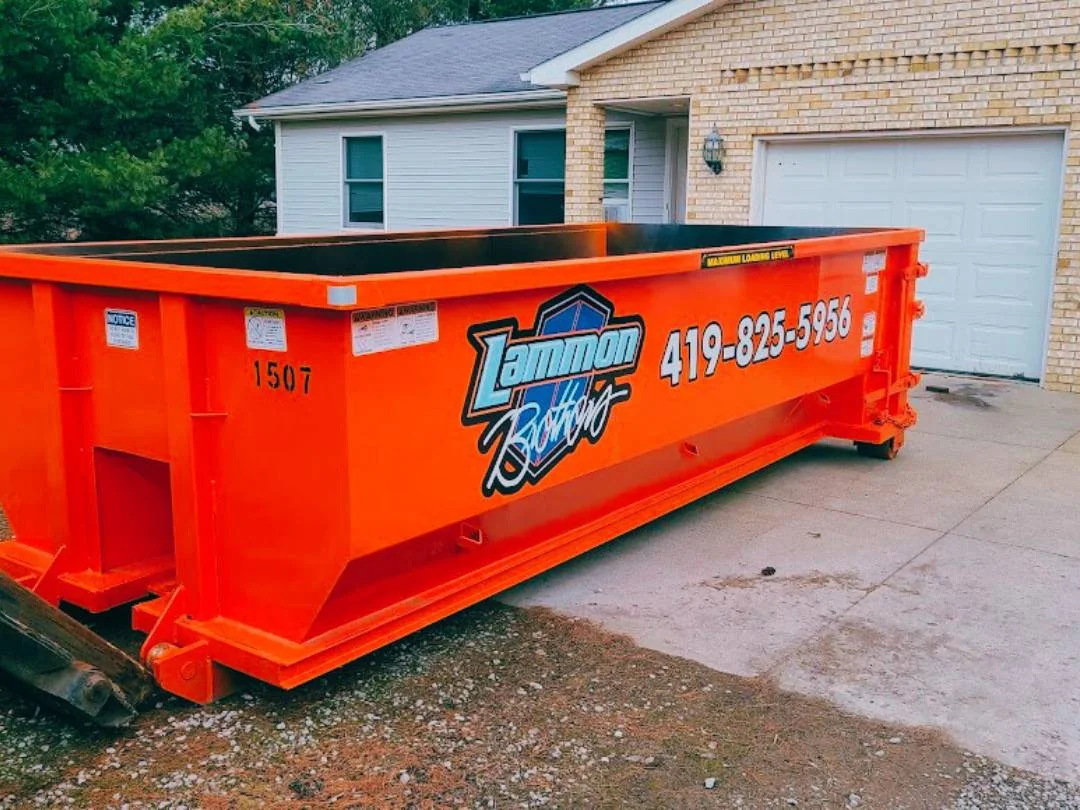
These are the two sizes homeowners go back and forth on most, so here's the side-by-side. The 15 yard is $370, measures 16 feet long, holds about six pickup loads, and includes 4 tons. The 20 yard is $420, measures 22 feet, holds about eight loads, and includes 5 tons. Both are 8 feet wide with 4-foot walls, and both come with delivery, pickup, and 10 days in the flat rate.
The number people skip is the length, and it decides more jobs than the price does. Those extra six feet matter on a Toledo driveway. A 16-foot dumpster leaves room on most two-car drives for a vehicle to still get out; a 22-footer often takes the driveway for the duration. If your drive is short, shared, or you need the garage all week, that alone can settle it.
When the drive can take either, go by the debris. Flooring and carpet torn out across several rooms, a kitchen gut, a bathroom plus a hallway: that's 15 territory. Kitchen remodels stripped to the studs, full-floor cleanouts, and anything with bulky furniture in the mix want the 20, because cabinets and couches eat space fast and an overfilled dumpster can't legally leave with debris above the rim.
Weight cuts the other way. A double-layer roof tear-off or a load with plaster in it reaches 4 tons quicker than most people expect, and on jobs like that the 20's extra ton of allowance is worth more than its extra volume. If the material is heavy and the volume is small, say concrete from a patio, neither of these is right; that load belongs in a 10 by design.
If it's still a coin flip, take the 20. The $50 difference is cheap insurance against a second haul, which costs a full rental. Or skip the guessing: the size calculator matches your project type to a size using the same rule our phone quotes use, and (419) 825-5956 gets you a straight answer in one call.