
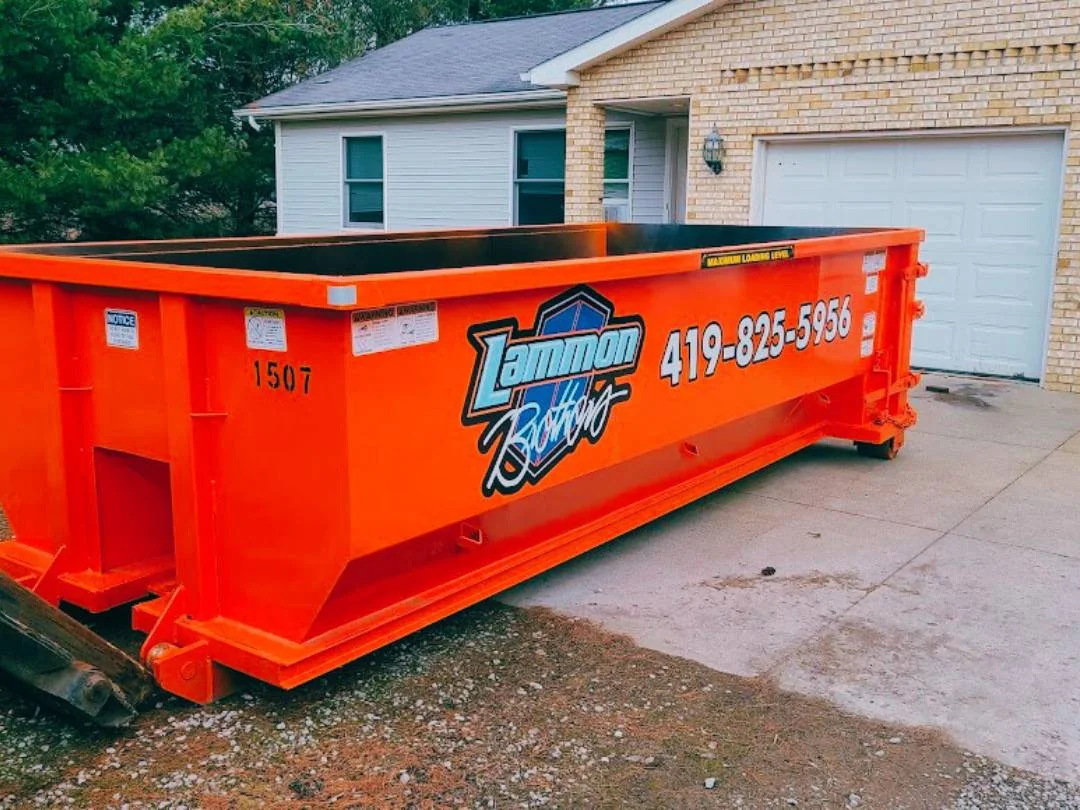
Each size includes a weight allowance in the flat rate: 2 tons on the 10 yard, 4 on the 15, 5 on the 20, 7 on the 30, and 9 on the 40. Go over and the overage runs about $60 a ton, and we talk that through before delivery, not after the scale ticket prints.
For most household jobs the allowance never comes up. Furniture, cabinets, drywall, and general junk run out of room long before they run out of weight. A packed 20 yard dumpster of remodel debris usually weighs two or three tons against its five-ton allowance.
Dense material flips that math. Concrete, brick, plaster, wet carpet, and shingles hit the limit while the dumpster still looks half empty, which is why we size heavy loads by weight instead of volume. A single layer of shingles off an average house weighs around two to three tons. Two layers roughly doubles it, which is the difference between a 15 doing the job comfortably and a 15 going overweight. Tell us it's a tear-off when you order and mention the layers; the roofing page walks through the shingle math in detail.
Concrete and brick are stricter still. Those loads belong in the 10 or the 15 on purpose, because a bigger dumpster full of broken sidewalk would blow past any allowance and past what a truck can legally lift. And dirt doesn't go in the dumpster at all; the landfill refuses it. If you're digging, clean fill dirt can come to our Delta yard instead, so ask when you call.
One habit prevents nearly every overage: load heavy material first and level, then top up with the light stuff, and be honest about what's going in when you book. The quote takes the weight into account, the driver knows what he's picking up, and the number you see on the prices page is the number you pay. Not sure which side of the line your job falls on? Call (419) 825-5956 and describe the pile; sizing it takes about a minute.